Bahasa melayu
 中文
中文
















The Hidden Driver Behind Your Receding Hairline: The Link Between Male Baldness and DHT
The Hidden Driver Behind Your Receding Hairline
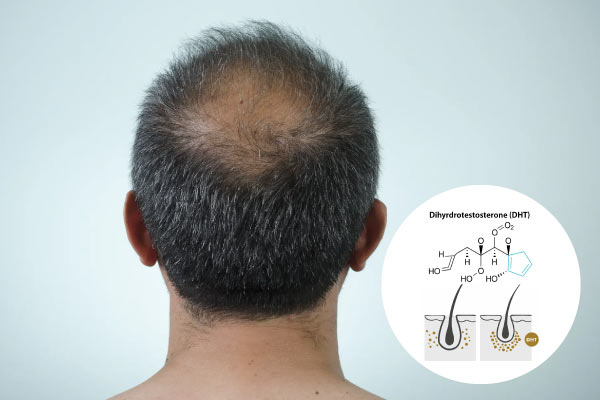
Many men notice in the mirror that their forehead looks wider than last year, and the crown of their head reflects light under the lamp. This change does not happen overnight, but once it becomes visible it often means that hair follicles have been shrinking for some time.
The main factor behind this process is DHT (dihydrotestosterone). The connection between DHT and male pattern baldness is as precise as a key fitting into a lock. Once your hair follicles are genetically sensitive to DHT, their growth ability gradually weakens until they can no longer produce healthy hair.
What is DHT and Why Does It Cause Hair Loss?
1. Nature and Source of DHT
- DHT is derived from testosterone through the action of the enzyme 5α-reductase and is two to three times more potent than testosterone
- During puberty, DHT is essential for male secondary sexual development, including Adam’s apple formation, a deeper voice, and beard growth
- In certain scalp areas such as the temples and crown, DHT shortens the hair growth phase, making hair thinner, softer, and eventually causing shedding
Scientific Evidence: According to the American Academy of Dermatology, over 80% of men with male pattern baldness have significantly higher local DHT concentrations in their hair follicles compared to men without hair loss.
2. How DHT Miniaturizes Hair Follicles
- Shorter anagen (growth) phase: Hair can no longer reach its original length and thickness
- Longer telogen (resting) phase: After shedding, hair follicles remain dormant for longer periods
- Follicle shrinkage: Blood circulation and nutrient supply decrease, producing fine, vellus-like hair
Why Are Some Men More Prone to Baldness?
- Genetics: Genes determine how sensitive your hair follicles are to DHT. A family history of early hair loss greatly increases your risk.
- Hormone levels: Men with higher DHT levels are more likely to experience follicle miniaturization.
- Lifestyle and health: Chronic stress, poor sleep, and an unbalanced diet accelerate the hair loss process. Rapid Hair Loss & Premature Graying During Weight Loss? 3 Key Solutions to Stop Baldness!

Hair Loss Stages and Early Warning Signs
Norwood–Hamilton Scale
- Stage I: Slight hairline recession
- Stage II: M-shaped hairline at the temples
- Stage III: Significant thinning at the front hairline
- Stage IV: Thinning at the crown (vertex)
- Stage V to VII: Bald areas at the front and crown merge into large-scale baldness
Early Signs of Hair Loss
- Gradual hairline recession with deepening temples
- Thinning at the crown with scalp visible under bright light
- Noticeable shedding during shampooing, exceeding 100 hairs per day
- Excess scalp oil production, dandruff, itching, or redness
Tip: Take monthly photos from the same angle to track changes and take early action if hair loss becomes noticeable.
Proven Ways to Reduce DHT’s Impact
1. Medical Treatments
- Oral medications: Finasteride and dutasteride inhibit 5α-reductase, reducing DHT production
- Topical medications: Minoxidil extends the growth phase and thickens hair shafts
- Low-level laser therapy: Stimulates follicle metabolism
- Hair transplantation: Suitable for advanced stages with irreversible follicle damage
2. Topical Care
- Ketoconazole shampoo: Reduces fungal activity and scalp inflammation
- Gentle scalp massage: Improves local blood circulation
3. Nutritional Support
- Zinc: Helps inhibit 5α-reductase
- B vitamins: Support energy metabolism and keratin synthesis
- Biotin: Reduces breakage and split ends
4. Lifestyle Management
- Sleep 7 to 8 hours daily
- Limit sugar and saturated fat intake
- Exercise regularly to help balance hormone levels

Herbal and Integrative Approach: TruHerbs Hairitage Botanical Beverage
Core Ingredient Lustriva
A combination of arginine silicate, inositol, and magnesium biotinate. Its biotin is 40 times more soluble than standard D-biotin, making it easier for the body to absorb.
Main Benefits
- Activates follicle vitality and stimulates new hair growth
- Increases hair thickness and density
- Slows premature graying
- Improves scalp oil balance and reduces dandruff
Herbal Formula Highlights
- Fo-Ti (Polygonum multiflorum): Extends the growth phase and increases melanin production
- Biota orientalis leaf: Inhibits 5α-reductase
- Angelica sinensis: Boosts circulation and relieves stress
Frequently Asked Questions (FAQ)
Q1: Is DHT the only cause of male baldness?
No. Genetics, inflammation, and lifestyle also influence the rate of hair loss.
Q2: Can diet changes lower DHT?
Not directly, but a balanced diet can improve the scalp environment and hormone balance.
Q3: Do I have to take medication for life?
In most cases, long-term use is required. Stopping may lead to resumed hair loss.
Q4: Does hair loss in young men always mean baldness?
Not necessarily. It could be temporary shedding due to stress or seasonal changes, but monitoring is important.
Conclusion and Action Plan
DHT is a major driver of male pattern baldness, but with medical treatment, proper nutrition, and a healthy lifestyle, you can slow the process significantly.
Start today by:
- Tracking hairline and density changes
- Maintaining good sleep and nutrition
- Caring for your scalp and seeking professional help if needed
- Trying an integrative herbal solution like TruHerbs Hairitage Botanical Beverage